What painting a house actually costs in MetroWest MA in 2026, room by room and job by job, plus the cost drivers and the red flags in a cheap quote.
The Short Answer for MetroWest Homeowners
Painting costs in MetroWest towns like Ashland, Framingham, Natick, and Sudbury are driven far more by prep, surface condition, and access than by the paint itself. Two homes of the same square footage can differ by thousands of dollars depending on how much scraping, patching, and priming the walls or siding need.
As a rough 2026 planning range: a single interior room typically runs roughly $400 to $900, a full home interior typically runs roughly $4,000 to $10,000, a house exterior typically runs roughly $5,000 to $15,000, and a kitchen cabinet refinish typically runs roughly $3,000 to $9,000. Larger, older, or more detailed homes sit at the top of each range.
These are market ballparks, not quotes. The only way to know your number is an on-site walkthrough, which is why Os Pine Painting offers free estimates across MetroWest.
Interior Painting: Per Room and Whole Home
Interior pricing usually starts from the room. A standard bedroom or home office with walls only typically runs roughly $400 to $700. Add the ceiling, trim, doors, and a closet and that same room can reach $700 to $1,100.
Bathrooms and kitchens often cost more per square foot than their size suggests because of cut-in work around tile, cabinets, and fixtures. Stairwells and two-story foyers carry a premium for the ladder and staging work required to reach high walls safely.
For a whole-home interior, most MetroWest projects land in the $4,000 to $10,000 range, with larger colonials and homes needing significant repair pushing higher.
- Bedroom or office, walls only: roughly $400 to $700
- Room with walls, ceiling, and trim: roughly $700 to $1,100
- Kitchen or bathroom: roughly $500 to $1,200 depending on detail
- Whole-home interior: roughly $4,000 to $10,000
Exterior Painting: What Moves the Number
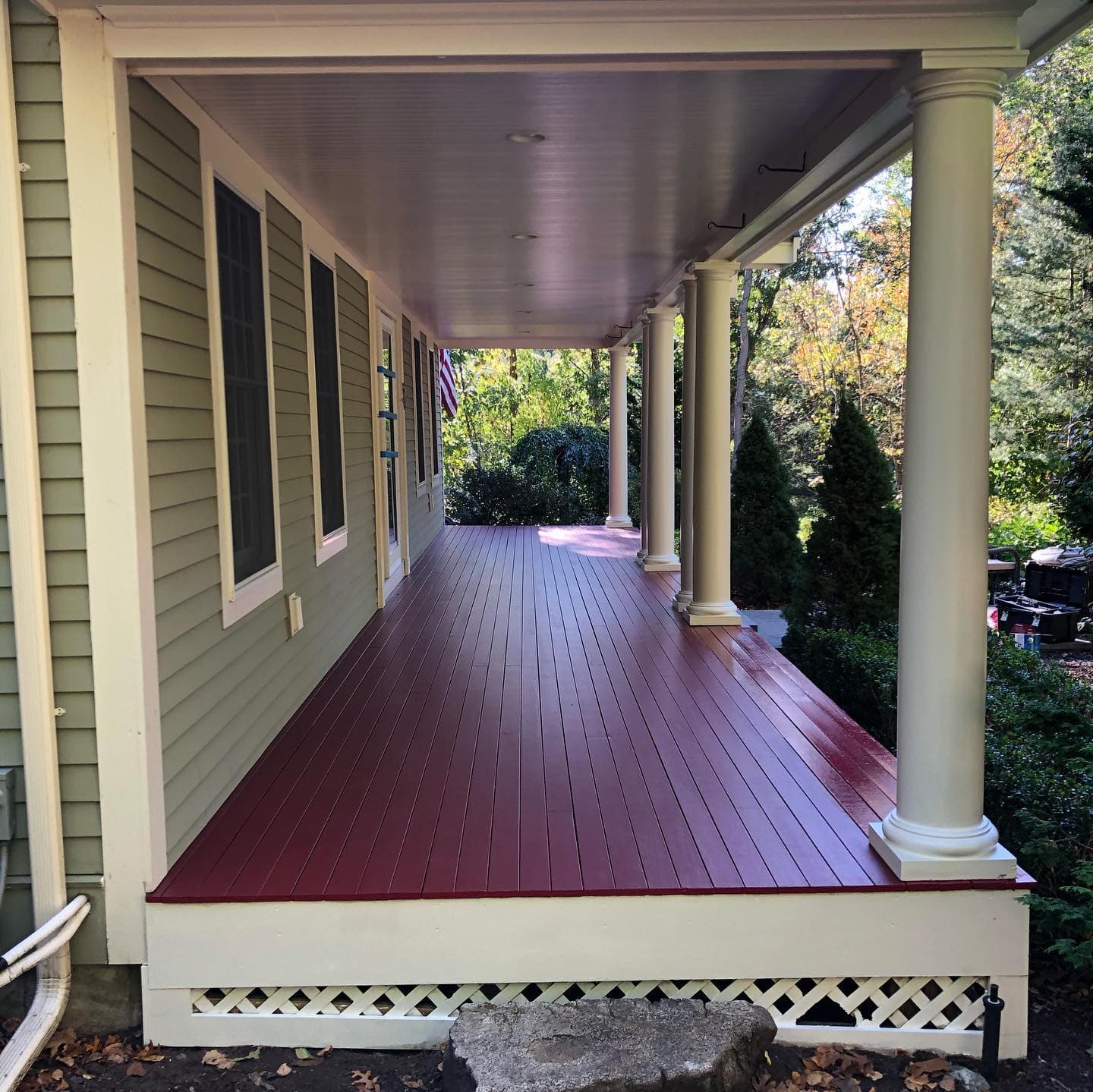
Exterior cost is tied to square footage, number of stories, siding type, and how much of the old finish has failed. A well-maintained ranch or Cape typically runs roughly $5,000 to $9,000, while a large or multi-story colonial with heavy prep can run roughly $10,000 to $15,000 or more.
Siding type matters. Clapboard and cedar shingles take more labor to prep and coat than smooth fiber cement. Extensive scraping, spot-priming bare wood, and replacing failed caulk all add hours before a drop of finish paint goes on.
Because New England weather is hard on exteriors, a quality exterior job includes a proper wash, scrape, sand, prime, and caulk cycle. Skipping those steps is where cheap quotes quietly cut corners.
Cabinet Refinishing Costs
Refinishing kitchen cabinets typically runs roughly $3,000 to $9,000 depending on door count, whether you add or replace hardware, and the finish system used. A small galley kitchen sits near the bottom of that range; a large kitchen with an island and a pantry sits near the top.
Sprayed enamel is the standard for a durable, factory-like finish. It costs more than brushing and rolling because of the masking, controlled environment, and multiple thin coats, but it is what makes painted cabinets hold up to daily kitchen use.
Compared with a full cabinet replacement that often starts around $15,000 to $30,000, refinishing is usually the higher-value path when the existing boxes are solid.
The Cost Drivers That Actually Matter
Most of your price is prep and complexity, not paint brand. Before you compare quotes, understand what pushes a number up.
Homes built before 1978 add another layer. Federal RRP rules require lead-safe work practices when disturbing old paint, which means containment and careful cleanup that legitimately add cost. In MetroWest, plenty of housing stock predates 1978, so this comes up often and is not optional.
- Prep: scraping, sanding, patching, and skim coating add real hours
- Number of coats: dark-to-light color changes often need an extra coat
- Ceiling height and stairwells: staging and ladder time
- Trim, doors, and detail: more cut-in work per room
- Siding type: cedar and clapboard cost more than smooth surfaces
- Priming bare wood or stains: necessary for adhesion and coverage
- Lead-safe practices on pre-1978 homes: containment and cleanup
How a Real Estimate Works
A trustworthy estimate starts on site, not over text. The estimator measures, checks surface condition, notes repairs, and confirms colors and sheens before putting a number on paper.
A clear proposal spells out surfaces included, number of coats, the prep scope, the paint product and line, and how change orders are handled. If a quote is a single lump sum with no scope, you cannot compare it fairly to anything.
Os Pine Painting provides free on-site estimates and written scopes so homeowners in Hopkinton, Holliston, Wayland, and Marlborough know exactly what is and is not included.
When a Cheap Quote Is a Red Flag
A bid that comes in far below the others is usually missing something. The most common cuts are prep steps, a second coat, proper priming, and lead-safe practices on older homes. You do not see the difference on day one; you see it when the finish peels a year later.
Watch for vague scopes, no proof of MA insurance, large cash-only deposits, and pressure to sign immediately. Quality paint and skilled labor cost what they cost, and a healthy quote reflects that.
The goal is not the cheapest number or the most expensive one. It is the fairly priced job that includes the prep and coats your home actually needs so the finish lasts.